|
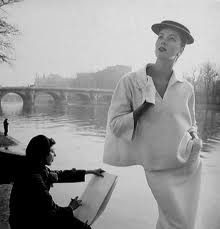
| Bettina Blouse |
HUBERT GIVENCHY
Time to get serious again..... continuing series on the history, legacy and benefits of past designers. Hopefully you'll learn something, or at least appreciate today's fashion. Because, folks, not surprisingly, nothing's new!Born in 1927 to an aristocratic French family Hubert James Taffin de Givenchy was raised predominantly by his mother and maternal grandmother from whom he inherited his passion for fabrics. He headed to Paris at the age of 17 and enrolled at the Ecole des Beaux-Arts. Apprenticed to Jacques Fath in 1945, he then worked under the legendary Italian designer Elsa Schiaparelli. Givenchy made an immediate impression - statuesque and handsome (he was 6' 6") and his designs epitomised glamour and femininity.
In 1952, he established his couture house, la Maison Givenchy, launching his debut collection of separates; light floor-length skirts and stunning blouses, including the celebrated Bettina Blouse, named after model of the day Bettina Graziani. The Bettina Blouse was actually made from a cheap cloth that was normally used to produce the toile for the more luxurious fabrics. A

Interestingly, he inherited his design aesthetic of simplicity from his friend and mentor, Cristóbal Balenciaga (see For your Erudition - CB). The two were designing at the same time in Paris and no doubt inspired each other.
Givenchy is credited with pioneering the princess silhouette: in simple terms, a fitted bodice, small tight waist with a full flared skirt. Extremely feminine and glamourous. While this style of dress had been around for many years before, Givenchy transformed it from the evening only ball gown to the everyday dress.


 You cannot acknowledge Givenchy's contribution to fashion legacy without mentioning at least his long term relationship with Audrey Hepburn. The two practically go hand-in-hand, both through an evolution of her personal style and a development and popularity of his designs. I can't help wondering where either of them would have ended up if it hadn't been for this close collaboration. A symbiotic relationship that benefited both, I believe. In the words of Hepburn, Givenchy to her was more than a couturier, and indeed she to him far more than a muse. Theirs was a relationship not only of professional advantages, as they propelled one another into the royalty of their respective worlds, but one of deep and long-lasting affection, that would continue for more than forty years.
Givenchy designed Audrey Hepburn's personal ensembles, as well as those made famous by her in the films Funny Face, Sabrina, and of course that little black dress in Breakfast at Tiffany's.
Interestingly, Givenchy was told to expect Ms Hepburn at his studio in Paris for a costume consultation for an up and coming film, Sabrina (1954). Mons. Givenchy, not completely au fait with Hollywood celebrity and current affairs, anticipated Ms Katherine Hepburn to appear and had already started to draft designs based on her figure and style. But who should turn up at the door? But Audrey!
This little story of coincidences and serendipity makes me feel all warm inside as the theme of my SWAP 2013 is the Hepburn - based upon both ladies' styles and I've only just learned this story because of the research and reading done for this post.
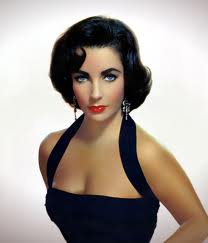


 Although we admire Audrey's gamine figure today, back in 1950 it was the opposite of Hollywood glamour. Think Marilyn Monroe, Elizabeth Taylor, Jane Russell at al. - all hourglass, cleavage, hips - curves and sex appeal from head to toe. Then along comes the boyish stick figure of Audrey. Personally, I see that Givenchy gave her the curvaceous, feminine figure desired at the time as defined by his clothes and cut: waistlines, gathers and drapes over the hips to widen and round, high necklines to disguise lack of cleavage but still creating the all important sex appeal. For this reason - fullness over the hips - he has never been on my list of favourite European designers I being one of those (un)fortunate beings who do not need anymore fabric that absolutely necessary in that area. But I do admire his style and skill in being able to create an hourglass figure where none exist with just the cut of a skirt or a dress.
 |
| 1966 |
This may have contributed to him selling the business to Louis Vuitton Moët
Hennessey in 1988, and ultimately to retiring in 1995. Still alive in his 80s and enjoying his retirement, Givenchy has very little to do with the fashion world today but his legacy lives on. He created a style that requires no embellishment - ever see embroidery or jewels on an original Givenchy? The clothes create the mystery of the figure beneath and they are the only decoration a girl needs. He selected and used the best and the most innovative of fabrics for his collections and let them speak for themselves. Givenchy's name and legacy have been synonymous with Parisian chic for more than 50 years and will continue for probably another 50.
Looking back over his designs and creations we can, yet again, see the inspiration for many of today's trends and styles - but as we read and learn - nothing in this world is new!
Looking back over his designs and creations we can, yet again, see the inspiration for many of today's trends and styles - but as we read and learn - nothing in this world is new!
 |
| 1969 - Feathers cocktail dress |
 |
| 1971 - cotton, plastic, glass and silk |
 |
| 1975 - silk jersey - delicious |
 |
| 1980 - Burda S/S 2012? |
More detail, procrastination and vital information can be found at the following sites:
http://www.vogue.com/voguepedia/Givenchy
http://www.metmuseum.org/collections/search-the-collections?ft=givenchy&rpp=60&pg=1
http://www.givenchy.com/
My thanks and credits go to coutureallure.com for images as well as the metmuseum and other images gleaned from Google
Next time, I think I'll deviate from my roots somewhat and head across the pond, but not towards a 'designer' but a Hollywood costumier. Any guesses who?