Thank you for all your help in choosing a summer rain coat pattern. In the end I opted for the German Pattern Company's linen one with kimono sleeves and belt. The fabric I bought is a linen and cotton mix so you get the look and feel of linen without the millions of wrinkles. It is a creamy buttermilk colour that will go with anything. You may remember I wanted a colourful, happy lining and found this lily flower in a pink colour-way locally. I loved this fabric so much I bought enough to do the lining and make a dress!!!! The problem with the linen though was it has a loose weave and the flowers showed through, so I had to underline the jacket with a cream cotton. This jacket therefore has three layers and became a little more substantial than originally intended. Oh the joy and unexpected outcomes of home sewing! Anyhow, three layers should be enough to protect me from summer showers. I'll maybe spray some Scotchguard on a sample to see how it turns out. Have you ever 'waterproofed' fabric? What happened?
 |
| Cotton underlining, patterned lining and shell linen mix fabric. |

 I topstitched the whole way around the edge of the jacket by using two threads in the one needle. I added a white thread to the colour coordinated cream one to make the topstitching stand out a little more. Instead of using a thicker thread which tends to tangle in my machine and saves re-threading every time you want to do topstitching.
The belt system is great. I had reservations about a belted coat but this is just marvellous. There are two slits in the side seams and the loose belt threads through these on the inside. The effect therefore, is a neat belted front (with a waist) and a loose, straight back - no sway back visible. Of course, the belt can be removed or even worn around the back and loose at the front - what ever takes your fancy.

The jacket is an easy make, especially as there are no sleeves to ease and insert. As it is meant to be casual and loose, fitting is not an issue either. I opted for patch pockets but the pattern comes with side seam pockets too if you want. The pattern is also marked for different lengths so you could easily make a short bolero-style as shown on the pattern photo. As usual, the instructions are in German but this time I just followed instinct and didn't try to translate or decipher.


And my solution to all the dress sewing headaches - a little pink draped cardi made from leftovers of the twisted front jumper and the pattern from Three Hours Past

 Under collar and turned back sleeves reveal the matching fabrics.

 |
| coutureallure - 1950s coat and fitted dress |


I bagged the lining of the jacket so it has quite a neat finish - almost reversible - and if I really feel like it I can go for all out chaos. It's a bit much and too matchy-matchy but reminiscent of 1950/60s coat and dress suits.
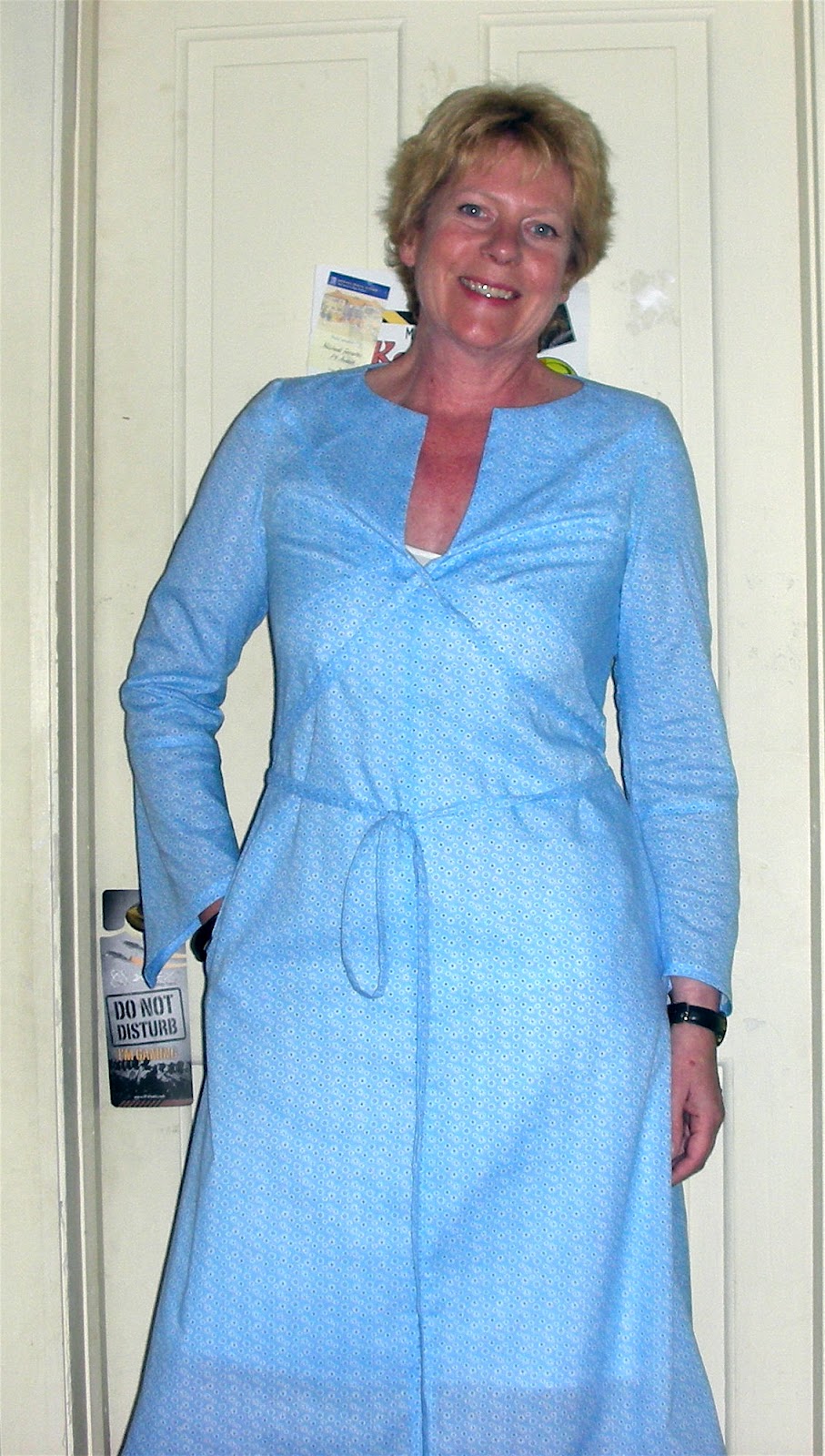
The dress turned out OK in the end - by no means perfect but wearable. The jacket though I'm really pleased with - it almost ticked every box in my very specific Mac wishlist.......
.........and would you believe it - it's NOT RAINING! Ruth